
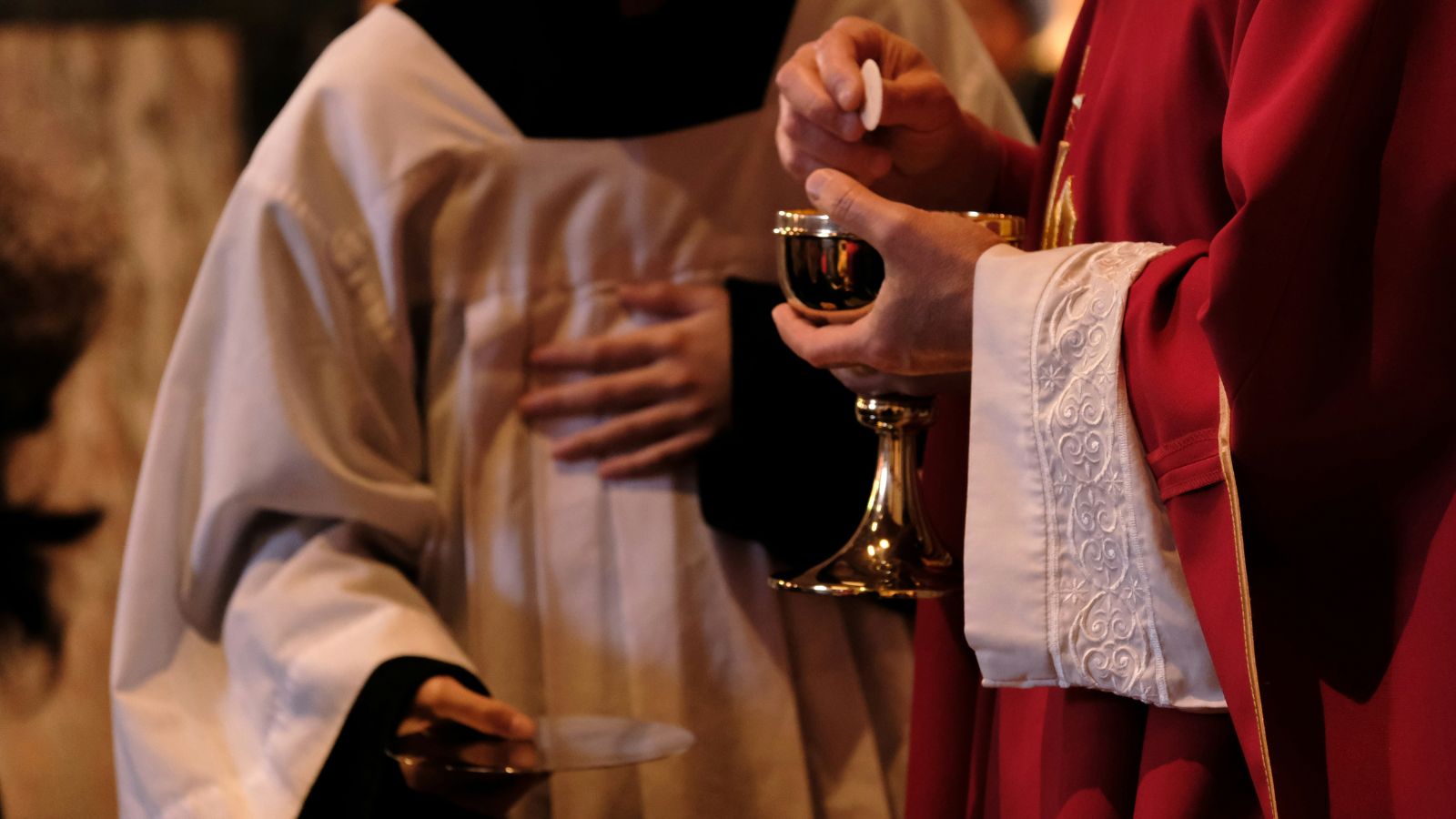
The question of receiving Holy Communion has several dimensions in our Catholic faith. Our teaching guides us to know that we should be in a state of grace to receive the Eucharist. If we are aware of any serious sin, that should be confessed in the Sacrament of Reconciliation before we receive the Host during Mass. We also teach that during every celebration of the Eucharist, there are multiple points where our minor - "venial" - sins are forgiven; this is intentional, to permit us to receive the Body & Blood of Christ and continue to benefit from Jesus' healing grace.
"Communion" also speaks to a reality of shared belief; only those who share our Roman Catholic belief properly receive the Eucharist at Masses. These teachings emphasize that when we say "Amen" to the priest, deacon or Eucharistic Ministers' acclamation, "The Body of Christ," that we agree in faith to what the Roman Catholic Church teaches about the real presence of Jesus, consubstantial with the Father, in the transubstantiation of the simple bread and wine through the power of the Holy Spirit. We ask those of other faith tradition to respect our beliefs, just as out of respect for their differences, we would not receive Communion in the context of their liturgies, even though they may invite us to join.
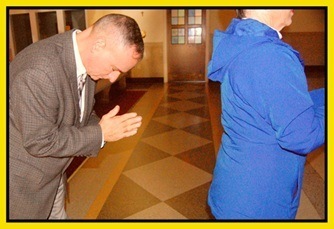
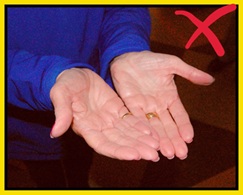
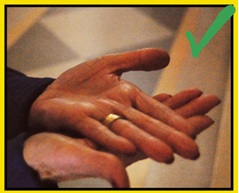
Part of the ancient teaching of the Church emphasized the unity of how we receive; we are one Body of Christ. Liturgically, our concurrence with that teaching is reflected in the common manner in which we receive Jesus.
Standing? Kneeling? Open Hands or Tongue?
Posture sometimes becomes a source of contention when approaching for Holy Communion. In the first 800 years of our Church, the practice was always to receive in the hand, with reverence. The western Church gradually shifted to reception on the tongue, and the Second Vatican Council reaffirmed that reception in the hand was proper and permitted. Vatican II emphasized a return to the early prayers and practices of our Roman Catholic Faith. They also decreed that the national councils of bishops in each country should establish the norm for that country. You can find the United States Council of Bishops' teaching on this here. Don't be surprised if you travel to find that the norm in other countries might be different.
Reverence is important, and begins before we even head to church. We should be sure that our hands are clean, and seasonally we should be careful of our garments. Long sweaters where your thumbs are looped into the sleeves, or wearing gloves when receiving on the hand risks dropping the Consecrated Host.
If you want to read more about Holy Communion in the Early Church, please read this essay from the McGrath Institute at Notre Dame University.
A final note on the "local practice" at OLGC
Low Gluten Hosts are available at all the Masses. Any parishioners who require such low gluten when you receive should always move to the line of the priest who is presiding at that Mass, and when you approach him, simply say clearly, "Low gluten, please."
Eucharistic Ministers assist with taking Holy Communion to the homebound and to residents in the eight nursing and residential facilities we serve at OLGC. Never ask for "extra" hosts while in the Communion line; always receive Holy Communion yourself first, and then enter the sanctuary. After the distribution to the congregation, the priest or deacon will then provide the necessary hosts for your visits to the homebound, which must take place immediately following Mass. Church teaching prohibits anyone from keeping the hosts overnight (or even extended periods in the same day) in private homes or residences. If you are visiting our parish from another area, and would like to bring communion to a homebound relative or friend, you must meet with the priest before Mass to discuss your credentials and training, to see if they are transferrable while you are visiting.